
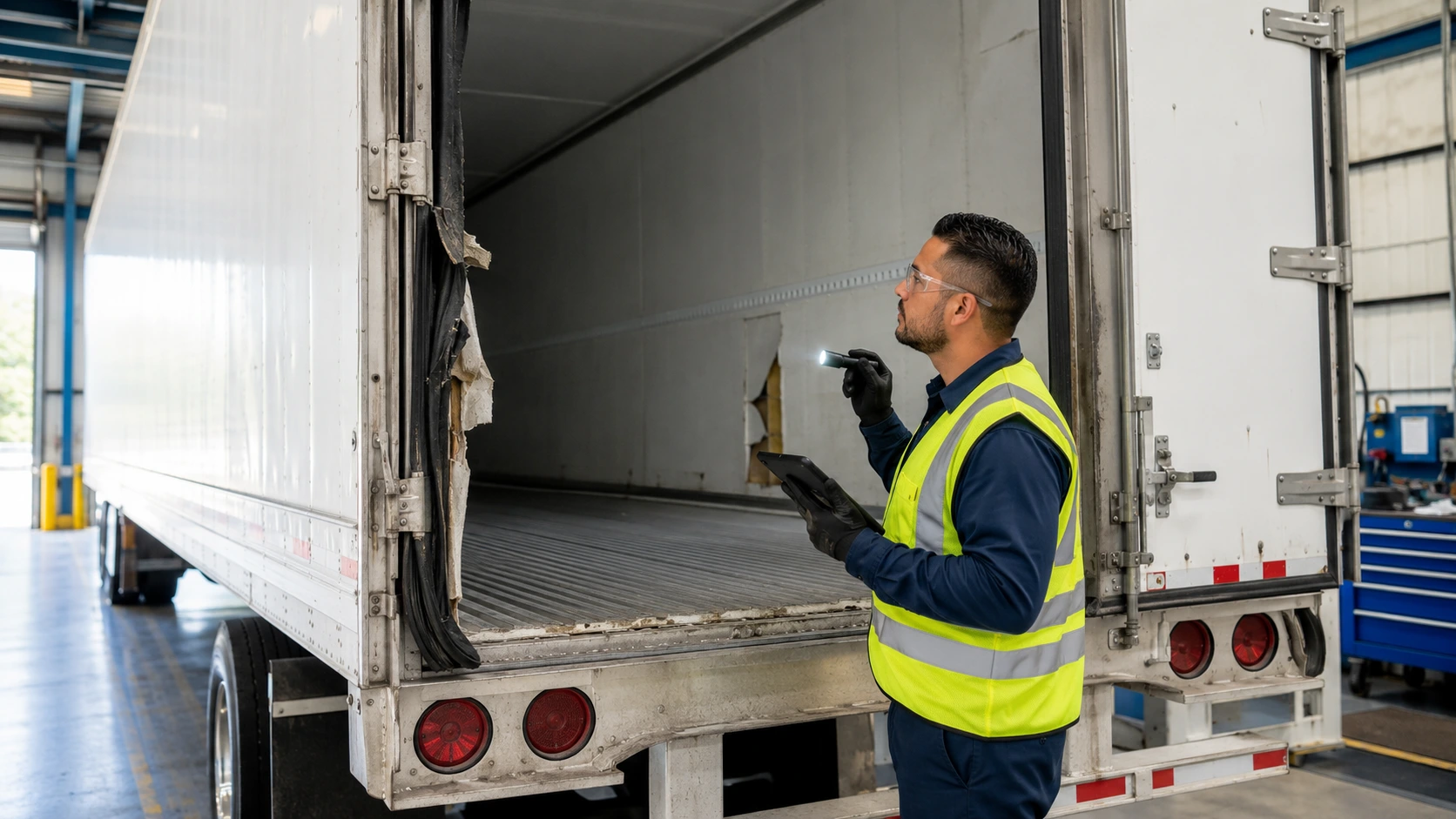
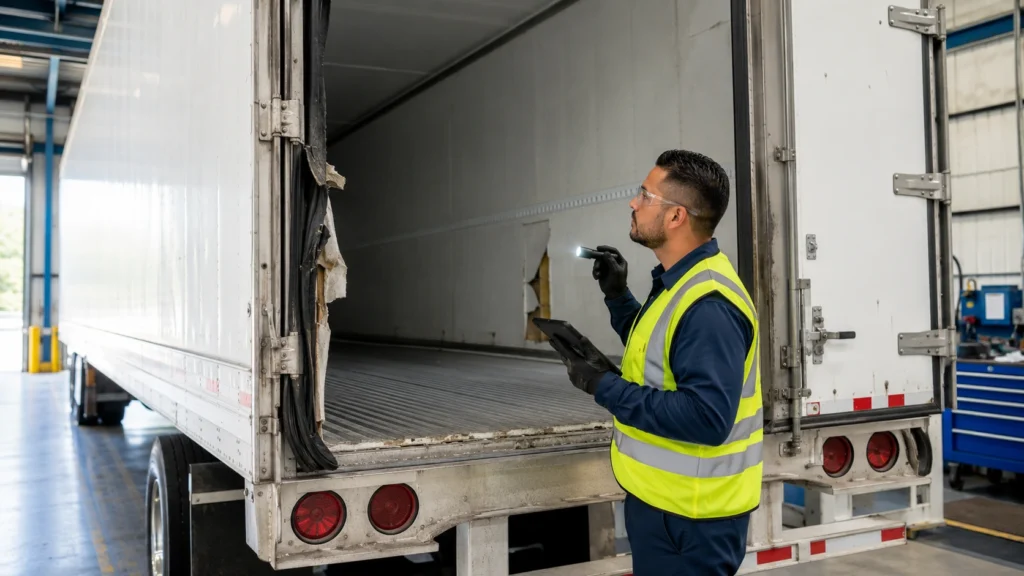
Reefer trailers carry temperature-sensitive cargo through demanding road, loading and weather conditions. Although the refrigeration unit receives much of the attention, the trailer body is equally important.
Damaged floors, doors, seals, panels, roofs or insulation can allow outside air and moisture to enter the cargo area. Structural damage may also affect loading, door operation and the trailer’s ability to protect cargo.
A visual inspection before the next load can help drivers and fleet managers identify damage that requires professional attention. Here are seven signs your reefer trailer may need repair.
Why Reefer Trailer Body Condition Matters
A refrigerated trailer is designed to create an enclosed, insulated cargo space. The refrigeration unit can only perform effectively when the trailer body helps contain the conditioned air.
Damage to the trailer body may contribute to:
- Air entering or escaping the cargo area
- Moisture intrusion
- Uneven interior conditions
- Additional strain on temperature-management operations
- Cargo-area contamination concerns
- Door-alignment problems
- Structural deterioration
- Loading and unloading difficulties
The exact effect depends on the location and severity of the damage. A professional inspection can determine whether the affected component needs adjustment, sealing, reinforcement, fabrication or replacement.
Technomech Trailer Repair provides reefer trailer repair in Houston for qualifying body, floor, roof, door, panel and structural problems.
1. Reefer Trailer Doors Do Not Close or Seal Properly
Reefer trailer doors are opened and closed repeatedly during loading, unloading and delivery operations. Hinges, latches, frames, hardware and seals can wear or become damaged over time.
Watch for these warning signs:
- Doors are difficult to open or close
- Swing doors do not align evenly
- Latches require excessive force
- Visible gaps remain after closing
- Door seals are cracked, torn or missing
- Daylight is visible around the closed door
- Moisture appears near the door opening
- The rear frame looks bent or damaged
A door problem may involve more than the gasket. Hinges, latches, rear-frame components or mounting points may have shifted or become damaged.
Replacing a seal without correcting a bent frame or misaligned door may not resolve the entire problem. The complete door assembly should be inspected.
2. Cracked, Soft or Uneven Reefer Trailer Flooring
Reefer trailer floors experience repeated forklift traffic, pallet movement, cargo weight, moisture and temperature changes. Damage can develop in the visible floor surface or the supporting components underneath it.
Signs of floor damage include:
- Cracked flooring
- Soft or weak areas
- Sagging sections
- Loose or raised floor material
- Corrosion around floor components
- Gaps between floor sections
- Water collecting in damaged areas
- Uneven movement under loading equipment
- Damage near the rear entrance
Floor damage can affect sanitation, cargo movement and structural support. Cracks and gaps may also allow moisture to reach insulation or supporting materials beneath the surface.
A thorough inspection should evaluate the floor from above and, where accessible, examine crossmembers and supports below it.
3. Visible Damage to Side Panels
Exterior and interior panels can become damaged by loading equipment, cargo movement, road debris, collisions or contact with docks and nearby objects.
Panel damage may appear as:
- Dents
- Punctures
- Cracks
- Tears
- Loose panel sections
- Separating seams
- Exposed insulation
- Water staining
- Corrosion around damaged areas
A small exterior puncture can become more serious if it exposes insulation or allows moisture into the wall system.
The appropriate repair depends on the panel material, depth of the damage and condition of the surrounding structure. Some areas may be patched, while larger or severely damaged sections may require panel replacement.
4. Roof Leaks or Interior Water Stains
A reefer trailer roof can be damaged by low-clearance contact, falling objects, branches, loading equipment, corrosion or deteriorating seams.
Possible roof-damage indicators include:
- Water stains on the ceiling or walls
- Moisture inside the cargo area
- Visible roof punctures
- Cracked or separating seams
- Loose roof material
- Damaged corner areas
- Light visible through the roof
- Wet or deteriorated insulation
- Recurring moisture after rain
Houston’s rain, heat and humidity can make unresolved roof damage more problematic. Moisture entering the wall or ceiling system may remain hidden until staining or deterioration becomes visible.
Inspect suspected roof damage promptly instead of covering only the visible interior stain.
5. Damaged or Exposed Insulation
Insulation helps the trailer body resist heat transfer. It may become damaged after panel punctures, roof leaks, floor damage, moisture intrusion or previous repairs.
Warning signs may include:
- Insulation visible through a damaged panel
- Wet insulation
- Crumbling or compressed insulation
- Interior sections that feel unusually warm
- Condensation near a damaged area
- Repeated moisture problems
- Panels separating from underlying materials
- Repairs that leave gaps in the insulated structure
Wet or deteriorated insulation may not perform as intended. Simply covering the exterior damage without inspecting the insulation can leave the underlying problem unresolved.
A repair professional should evaluate the damaged panel, insulation and surrounding structure together.
6. Cracked Welds or Structural Components
Reefer trailers contain welded frames, crossmembers, brackets, door structures and other supporting components. Road vibration, loading impacts, corrosion and repeated commercial use can contribute to cracks or separation.
Inspect for:
- Cracks around existing welds
- Broken brackets
- Bent crossmembers
- Loose supports
- Separation near the rear frame
- Floor sections moving under load
- Rust lines along welded areas
- Recurring cracks near earlier repairs
- Damaged landing-gear mounting areas
Structural damage should not be treated as a cosmetic issue. A crack can spread into nearby material or place additional stress on surrounding components.
Depending on the damage, repair may involve welding, reinforcement, fabrication or replacement of the affected component.
7. Persistent Air or Moisture Leaks
Air and moisture intrusion may indicate damage that is not immediately obvious. Possible entry points include door seals, panel seams, roof joints, floor sections and previous repair areas.
Look for:
- Condensation in one area
- Repeated moisture near doors
- Water stains after rain
- Loose or deteriorated seals
- Gaps around repaired panels
- Interior dust entering through cracks
- Light visible around doors or body seams
- Rust developing around joints
- Cargo-area surfaces repeatedly becoming wet
The visible moisture may be located away from the original entry point. Water can travel through seams or insulation before appearing inside the trailer.
A detailed inspection can help identify the source rather than treating only the visible symptom.
Pre-Load Reefer Trailer Body Inspection Checklist
Before accepting the next temperature-sensitive load, inspect the trailer body in a well-lit location.
Exterior inspection
Check:
- Roof and upper corners
- Side panels and seams
- Rear frame
- Doors, hinges and latches
- Landing-gear mounting areas
- Visible crossmembers and supports
- Previous repair locations
Interior inspection
Check:
- Floor condition
- Wall and ceiling panels
- Door seals
- Moisture or staining
- Exposed insulation
- Loose interior components
- Light entering through gaps
- Unusual odors associated with moisture
Door inspection
Close the doors and confirm:
- Both doors align correctly
- Latches operate normally
- Seals contact the frame consistently
- No obvious gaps remain
- Hinges and mounting points appear secure
If damage is discovered, document it with photos and inform the repair shop whether the trailer is loaded.
Can a Damaged Reefer Trailer Be Repaired?
Many reefer body problems may be repairable, but the appropriate solution depends on:
- Material involved
- Location of the damage
- Size and depth of the affected area
- Condition of the insulation
- Presence of moisture or corrosion
- Structural involvement
- Previous repairs
- Accessibility of the component
Possible repairs include:
- Door adjustment
- Seal or gasket replacement
- Panel patching or replacement
- Floor-section repair
- Roof repair
- Insulation replacement
- Welding and fabrication
- Crossmember replacement
- Frame or bracket reinforcement
A physical inspection is necessary before deciding whether a component should be repaired or replaced.
Reefer Body Repair vs Refrigeration-Unit Repair
These are two different service categories.
Reefer body repair
This can include:
- Floors
- Roofs
- Side panels
- Interior panels
- Doors
- Door seals
- Insulation
- Frames
- Crossmembers
- Chassis components
- Welding and fabrication
Refrigeration-unit repair
This can include the mechanical refrigeration system, compressor, condenser, evaporator, refrigerant circuit, controller and temperature-unit diagnostics.
Technomech’s reefer service content should focus on confirmed trailer-body and structural capabilities. Customers requiring refrigeration-unit mechanical work should call first to confirm whether that specific service is available.
When Should You Stop and Request an Inspection?
Arrange a professional inspection before loading when:
- A door cannot close securely
- Insulation is exposed or wet
- A floor section feels soft or unstable
- A structural crack is visible
- A crossmember appears bent or separated
- Water is entering the cargo area
- A roof or panel has a significant puncture
- A previous repair is failing
- Damage may affect cargo protection
- You are uncertain whether the trailer is suitable for the next load
The decision to load or operate a damaged trailer should be based on the actual condition of the equipment—not on assumptions from a quick visual check.
How to Reduce Future Reefer Body Damage
Routine inspection and maintenance can help identify developing damage earlier.
Consider:
- Inspecting doors and seals before loading
- Cleaning floor channels and drainage areas
- Documenting panel and roof damage
- Checking earlier repair locations
- Addressing moisture intrusion promptly
- Training forklift operators to avoid wall and floor impacts
- Inspecting crossmembers during maintenance
- Repairing loose brackets before they separate
- Keeping door hardware properly adjusted
- Scheduling periodic trailer-body inspections
Fleet managers should maintain records for structural repairs, water intrusion and recurring door or floor problems.
Schedule Reefer Trailer Repair in Houston
A damaged reefer trailer body can affect cargo protection, loading operations and overall trailer condition. Addressing door, floor, roof, panel, insulation and structural damage before the next load may help prevent more extensive problems.
Technomech Trailer Repair provides commercial reefer body repair at its Houston shop. Qualifying mobile assistance may be available within approximately 25 miles, depending on the damage and working conditions.
Technomech Trailer Repair
9346 Fairbanks North Houston Road, Houston, TX 77064
Call: (713) 420-9622
Calls are answered 24/7. Assistance is available in English and Spanish.
Frequently Asked Questions
What are the most common signs that a reefer trailer needs body repair?
Common signs include damaged door seals, misaligned doors, cracked flooring, punctured panels, roof leaks, exposed insulation, broken welds and moisture entering the cargo area.
Can damaged reefer trailer flooring be repaired?
Some damaged floor sections and supports may be repairable. The appropriate repair depends on the floor material, extent of damage, insulation condition and supporting structure.
Why are reefer trailer door seals important?
Door seals help limit outside air and moisture from entering the cargo area. Damaged seals may also indicate door-alignment, hinge, latch or rear-frame problems.
Can a punctured reefer trailer panel be patched?
Some smaller areas may be suitable for patching, while extensive panel or insulation damage may require partial replacement. The area should be inspected before selecting a repair.
Does Technomech repair reefer refrigeration units?
Technomech’s published service should focus on confirmed reefer body and structural repairs. Customers needing compressor, refrigerant or refrigeration-unit mechanical work should call to confirm availability.
Where can I get reefer trailer repair in Houston?
Technomech Trailer Repair is located at 9346 Fairbanks North Houston Road, Houston, TX 77064. Call (713) 420-9622 before visiting.