
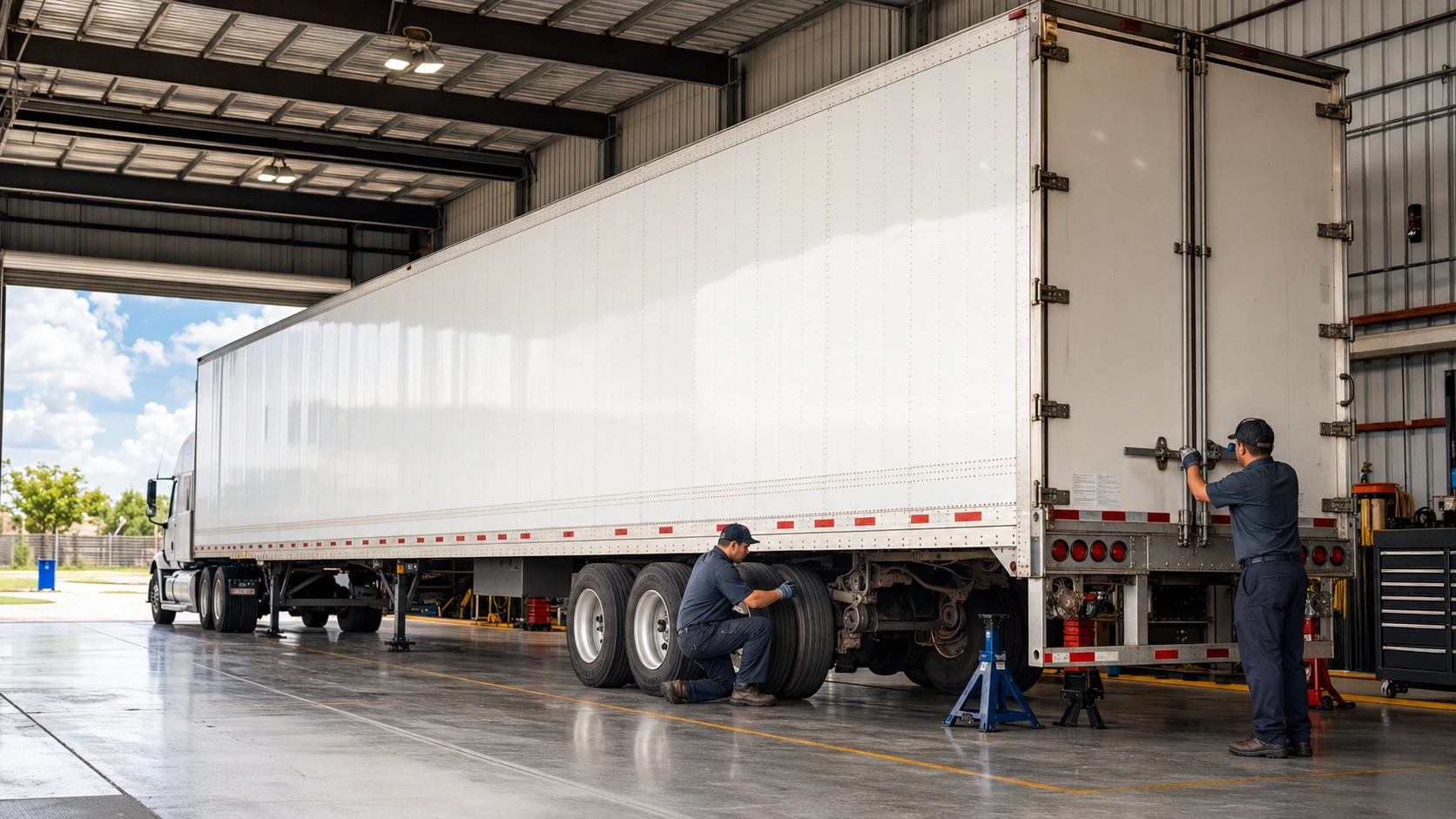
Commercial trailers work under demanding conditions. Heavy loads, long operating hours, frequent loading cycles, Houston traffic, road debris, heat, humidity and sudden storms can all contribute to wear. Without timely inspections and repairs, a minor defect may develop into a safety concern, cargo problem or costly interruption.
Professional trailer repair helps fleet managers, owner-operators and commercial drivers identify problems before they cause extended downtime. A qualified Houston repair shop can inspect the trailer, explain the findings and recommend repairs based on the condition of the equipment.
This guide covers the most common commercial trailer repairs, signs that service may be needed, the difference between shop and mobile repairs and ways to reduce unexpected breakdowns.
What Does Commercial Trailer Repair Include?
Commercial trailer repair includes diagnosing, repairing and maintaining the structural, mechanical and electrical systems of large trailers. Depending on the facility and trailer type, the work may cover:
- Brakes and wheel-end components
- Axles and alignment
- Suspension systems
- Tires and wheels
- Swing and roll-up doors
- Floors, roofs and body panels
- Landing gear
- Lighting and electrical wiring
- Welding and structural fabrication
- Chassis and twist locks
- Preventive maintenance
- DOT trailer inspections
A complete repair process should address more than the visible symptom. For example, uneven tire wear may be caused by the tire, but it may also point to axle misalignment, damaged suspension components or worn wheel-end parts. Correctly identifying the cause can help prevent the same issue from returning.
Commercial Trailers Commonly Repaired in Houston
Repair procedures vary by trailer construction and use. A shop that works primarily with commercial equipment should understand the requirements of different trailer types.
Dry van trailers
Dry vans may require repairs to floors, roofs, walls, rear doors, roll-up doors, crossmembers, suspension, brakes and lighting. Water intrusion should be addressed promptly because moisture can affect cargo and damage surrounding materials.
Reefer trailers
Reefer-body repairs can involve insulated panels, floors, roofs, rear doors and seals. Damage that compromises the insulated body may affect cargo protection. Confirm whether a provider repairs the trailer body, refrigeration unit or both before scheduling service.
Flatbed trailers
Flatbed repairs may include welding, deck work, structural inspections, suspension repairs, brakes, axles and lighting. Cracks, bent components and damaged securement points should be evaluated before the equipment returns to service.
Commercial chassis
Chassis service may include twist-lock repair, welding, structural work, brakes, axles, suspension, tires and lighting. Because the equipment supports and secures loaded containers, damaged structural or locking components require professional inspection.
Technomech Trailer Repair advertises services for dry vans, reefer bodies, flatbeds, chassis and other commercial semi-trailers at its Houston facility.
Most Common Commercial Trailer Repairs
1. Trailer brake and wheel-seal repair
Commercial trailer brakes experience repeated heat, friction and load-related stress. Warning signs may include:
- Reduced or inconsistent braking
- Unusual grinding or scraping sounds
- Air leaks
- Excessive heat near a wheel end
- Trailer pulling while braking
- Visible grease near brake components
- Damaged air lines or chambers
Wheel seals help retain lubricant and protect wheel-end components from contamination. A leaking seal can allow grease to reach braking surfaces or allow dirt and moisture into the hub. Because brake and wheel-end problems can affect safe operation, they should be inspected promptly.
Learn more about trailer brake and wheel-seal repair.
2. Trailer axle and alignment repair
Axle and alignment problems can affect tracking, stability and tire wear. Common warning signs include uneven tire wear, unusual noise, grease leakage, visible axle damage or a trailer that does not track correctly behind the tractor.
An inspection may cover:
- Axle condition
- Spindles and hubs
- Bearings and wheel seals
- Suspension connections
- Alignment
- Related brake components
Depending on the damage, the appropriate solution may involve servicing, straightening where suitable, component repair or axle replacement. Technomech provides commercial trailer axle repair at its Houston shop.
3. Trailer suspension repair
A trailer suspension supports the load and helps maintain stability. Air bags, leaf springs, bushings, hangers, equalizers and mounting points can wear or become damaged.
Possible signs of suspension trouble include:
- Trailer leaning to one side
- Uneven ride height
- Rapid or irregular tire wear
- Damaged or deflated air bags
- Cracked springs
- Excessive bouncing
- Unusual noises
- Loose or damaged mounting hardware
Technicians should inspect the complete suspension instead of replacing only the most obvious damaged part. A suspension problem can affect alignment, tires and other connected systems.
4. Trailer door repair
Rear doors are opened, closed and secured repeatedly, making them vulnerable to wear and impact damage. Swing doors may develop problems with hinges, locking bars, seals, panels or alignment. Roll-up doors may experience damaged rollers, tracks, cables, springs or lower panels.
Schedule door repair when:
- A door is difficult to open or close
- The locking mechanism will not engage
- A door does not sit evenly in its frame
- Light or water enters around the seal
- Rollers leave the track
- Hinges or panels show visible damage
A functioning door protects cargo, supports efficient loading and helps keep weather outside the trailer.
5. Trailer floor and roof repair
Trailer floors can be weakened by concentrated loads, forklift traffic, moisture or age. Warning signs include soft sections, cracks, broken boards, separation and visible crossmember damage.
Roof damage may begin as a small puncture, loose seam or damaged panel. Houston rain can quickly turn a small opening into water intrusion that affects cargo and interior materials.
The technician should inspect the area around the visible damage. A surface patch may not be sufficient if supporting components have also been affected.
6. Trailer lighting and wiring repair
Commercial trailer lighting problems may be caused by failed lamps, corroded connectors, damaged wiring, poor grounding or an issue between the tractor and trailer connection.
Common symptoms include:
- Brake lights that do not activate
- Turn signals working intermittently
- Marker lights repeatedly failing
- Lights flickering while the trailer moves
- Damaged connectors
- Exposed or corroded wiring
Electrical troubleshooting should identify the source of the failure instead of repeatedly replacing the same lamp or fuse.
7. Welding and structural fabrication
Cracks, bent crossmembers, damaged frames and broken brackets require proper evaluation. Commercial trailer welding may involve steel or aluminum, and the correct preparation and technique depend on the material and location of the damage.
Professional trailer welding and fabrication may include frame work, floor supports, brackets, toolboxes and selected structural modifications. Safety-critical structural damage should always be examined by a qualified repair professional.
8. Landing-gear repair
Landing gear supports the trailer while it is disconnected from the tractor. Hard cranking, uneven legs, damaged mounting brackets, unusual movement or a gearbox that slips may indicate a problem.
Ignoring landing-gear damage can make coupling, uncoupling and loading more difficult. Inspection may include the legs, gearbox, handle, cross-shaft, braces and mounting points.
Shop Repair vs. Mobile Trailer Repair
The choice between shop and mobile service depends on the problem, location and condition of the trailer.
Mobile service may be appropriate for selected lighting, wiring, air-line, brake, door and diagnostic issues at accessible commercial locations. It can be useful when the trailer cannot be moved easily or when on-site service can reduce towing and transportation time.
Major welding, structural work, axle replacement, extensive suspension repairs and jobs requiring lifting equipment are generally better suited to a fully equipped shop.
When requesting mobile trailer service, provide:
- Your exact location
- Trailer type and size
- Whether the trailer is loaded
- A description of the problem
- Photos when available
- Any warning lights, noises or visible damage
The service provider can then determine whether the repair is suitable for mobile service or requires shop equipment.
What Happens During a Trailer Repair Visit?
Although the process varies by repair, a professional visit usually includes:
- Initial conversation: The driver or fleet manager describes the symptoms and operating history.
- Visual inspection: A technician checks the affected area and connected components.
- Diagnosis: The shop identifies the probable cause and determines the repair requirements.
- Estimate: The customer receives information about recommended work, parts and expected timing.
- Authorization: Repairs begin after the customer approves the work.
- Repair and testing: Components are repaired or replaced and then checked for proper operation.
- Final explanation: The shop reviews completed work and any future maintenance recommendations.
Before authorizing repairs, ask whether additional work requires approval, whether parts availability may affect completion and what warranty applies to eligible repairs.
When Should a Commercial Trailer Be Repaired?
Arrange an inspection when you notice:
- Brakes responding differently than normal
- Uneven or rapid tire wear
- Air leaks
- Trailer pulling or tracking incorrectly
- Broken lights or recurring electrical failures
- Cracked welds or damaged structural components
- Roof leaks
- Weak or damaged flooring
- Doors that will not close or seal
- Suspension components that appear worn or damaged
- Landing gear that is difficult to operate
- Unusual vibration, movement or noise
If a defect could affect safe operation, do not continue driving simply to avoid downtime. Contact a repair provider and explain the condition before moving the equipment.
How Preventive Maintenance Reduces Downtime
Emergency repairs cannot always be avoided, but a planned maintenance program can identify many problems earlier. A trailer preventive maintenance inspection may cover brakes, axles, suspension, tires, lighting, doors, landing gear, structural components and body condition.
Maintenance frequency should consider:
- Trailer age and condition
- Mileage and operating hours
- Load type and weight
- Road and weather exposure
- Manufacturer recommendations
- Previous repair history
Keeping inspection and repair records also helps fleet managers recognize repeat failures and schedule equipment more effectively.
Choosing a Trailer Repair Shop in Houston
Before selecting a provider, confirm that the shop regularly works on large commercial trailers and can service your trailer type. Ask about its inspection process, repair capabilities, estimate procedure, communication practices and mobile-service availability.
A reliable shop should:
- Explain the problem clearly
- Inspect related components
- Provide an understandable estimate
- Obtain approval before additional work
- Communicate expected timing
- Use suitable parts and repair procedures
- Provide documentation of completed work
Convenience is important, but the quality of diagnosis and communication often determines whether a repair provides long-term value.
Commercial Trailer Repair in Houston
Technomech Trailer Repair provides commercial trailer repair and maintenance for dry vans, reefer bodies, flatbeds, chassis and semi-trailers. Available services include brake and wheel-end work, axles, suspension, doors, floors, roofs, welding, lighting, preventive maintenance and DOT trailer inspections.
The shop is located at 9346 Fairbanks North Houston Road, Houston, TX 77064. To discuss a repair, call (713) 420-9622 or contact Technomech Trailer Repair. Calls are answered 24/7; confirm technician and service availability when calling.
Frequently Asked Questions
What does commercial trailer repair include?
Commercial trailer repair may include brakes, axles, suspension, tires, doors, floors, roofs, lighting, wiring, landing gear, welding, chassis work and preventive maintenance.
How do I know when my trailer needs repair?
Warning signs include uneven tire wear, weak braking, air leaks, lighting failures, damaged doors, roof leaks, cracked welds, suspension problems and unusual movement or noise.
Does Technomech provide mobile trailer repair in Houston?
Technomech advertises mobile trailer service for eligible situations. Call with the trailer’s location and condition to determine whether mobile service or shop repair is appropriate.
What commercial trailers does Technomech repair?
Technomech provides repair services for dry van trailers, reefer trailer bodies, flatbeds, chassis and other large commercial semi-trailers.
Where is Technomech Trailer Repair located?
Technomech is located at 9346 Fairbanks North Houston Road, Houston, TX 77064.
How long does commercial trailer repair take?
Repair time depends on the damage, diagnosis, required labor, parts availability and current shop workload. Request an estimated timeline after the trailer has been inspected.